Thursday, September 30, 2010

Baltimore Beer Week and Stillwater Artisanal Ales

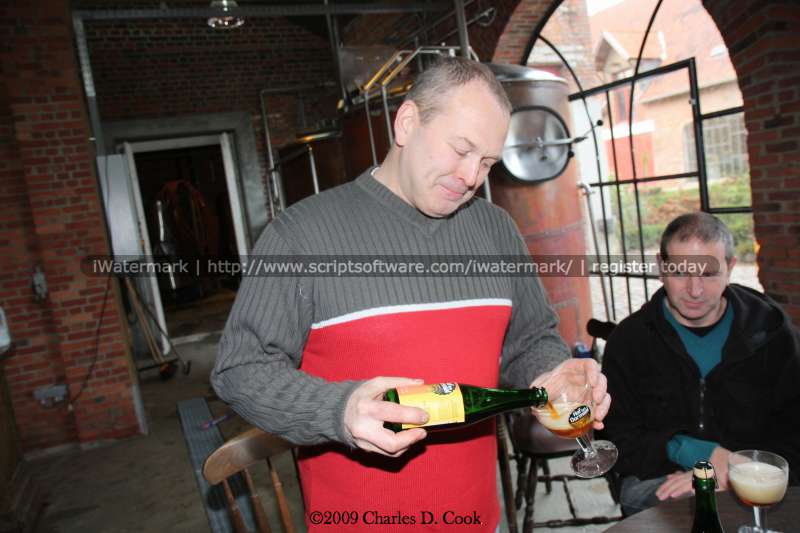
Top photo: Brian Strumke at "Belgium Comes to Cooperstown" 2010.
That's Jen of NYC's Blind Tiger on the right.

In just one week, the celebration of all things beery in Charm City begins.

The second edition of Baltimore Beer Week kicks off on Thursday,
October 7 at the Baltimore Musuem of Industry on Key Highway in
Federal Hill.

There are already 325 individual events planned over the course
of the ten day event, which ends Sunday October 17.

"Mr. Baltimore Beer" aka Brad Klipner, the official blogger of BBW,
covers the highlights on his website, here

The full schedule of events is listed the BBW website, here

Lots of fun stuff there. But you know what I specialize in.

The title of this blog says it all. Belgian Beer Specialist.

That means Belgian-style beers too.

Not that I don't like IPA's, palate peeling Double IPA's,
session beers or Prima pils. Cause I do. Just ask around.
Drop a six pack of Two-Hearted Ale or Celebration at my doorstep.
It won't be there for long.

But there's plenty of people writing about those brews.


Photo, above: Brian pulling a sample of a special brettanomyces-
infused, barrel-aged beer at his main brewery in Maryland.

So it's Baltimore Beer Week, and the guy turning everybody's heads
via their taste buds with his world-class Saison-inspired brews is
Mr. Brian Strumke, brewer/president of Stillwater Artisanal Ales.

Brian's been off brewing in Denmark and Belgium lately, but he'll
be back soon. Just in time for Baltimore Beer Week.


Brian in the brewhouse at his main brewery, Dog Brewing in
Westminster, Maryland.

Brian's premier event will be Sunday, October 10, from 10 am
to 3 pm. The locale: the friendly confines of Max's Taphouse,
Maryland's number one beer bar.

As Brian's first commerical brews debuted at Max's Belgian fest
in February, it's only fitting. Max's General Manager, Casey Hard,
has been a big supporter of Stillwater Artisanal Ales. Multiple
events have been held at Max's in the past seven months, with
special and rare Stillwater brews often seen on tap there.

You could say Casey knows a good thing when he sees it.


Photo, above: Casey Hard of Max's Taphouse


Photo, above: Brian putting dry hops in a cask of Cellar Door.

This lineup for the Max's event just in from Brian, today:
(he took a little break from a long brew day at Huisbrouwerij
St. Canarus, so I could get the word out)

of Love & Regret
A Saison Darkly
Stateside Saison
Autumnal
Cellar Door
Channel Crossing V2
Stillwater / Voodoo Jungle des Rue

and, drum roll please....a "Rare Beer 101" bottle release!
This one is "Requisite", which is described as an "Imperialistic" Stout.
Only 75 twelve ounce bottles were produced of this new brew.

Brian also mentioned "various casks" will be on hand.
Yum. It's gonna be a long, enjoyable Sunday....

The rest of the Stillwater calendar of events for BBW is here.

Oh yeah, and yours truly will be showing photos inside Belgium's
lambic and sour brown ale breweries at Max's Sour beer event on
Sunday the 17th, from noon-1 pm. Gunther Bensch of Brouwerij
Montaigu will join me in.

Space is limited, so you have to RSVP Casey to reserve space.


Photo, above: Brian and his sister, Brenda Strumke, at
Birch and Barley, Washington, D.C.

Monday, September 27, 2010

Trappist Westvleteren adds new fermentation tanks

Photo, above: Belgian journalist Danny Van Tricht, speaking with
Brother Benedict in the brewhouse at Westvleteren, as Brother
Joris looks on.

My good friend and colleague, Danny Van Tricht, broke the news
today that Brouwerij Westvleteren has added three new 15 hectoliter
(about 13 US barrels) fermenting tanks:

http://trappistbier.wordpress.com/2010/09/27/westvleteren-vernieuwt

The text is in Dutch, but the short, squat fermenters are shown in the
4th, 5th, and 6th photos in Danny's post.

If you look straight down the middle of the 4th photo, you can see
the entrance to the present lagering/secondary fermentation cellar.
To the right in the photos are several water tanks. It's also obvious
that a new floor has been added as well.

Here's a photo, below, of Brother Joris (left) and Danny in the room
as it appeared previously:


What do these developments mean for beer lovers? Well, only
time will tell. But I suspect we might be hearing more about
Westvleteren in the not-too-distant future.

Thursday, September 23, 2010

The World's Rarest Oude Geuze?


Yves and Kurt Panneels run what is arguably the world's
greatest lambic cafe: In de Verzekering Tegen de Grote Dorst.

The name translates as "In the Insurance against the Great Thirst."

Meaning: your thirst for lambic beers will be quenched when you visit!


I wrote about the cafe here: Grote Dorst

Often called Grote Dorst for short, the atmospheric, friendly bar is located in the small town of Eizeringen, about ten miles west of Brussels. Grote Dorst is open on Sundays between 10 am and 1:30 pm, as well as during the three special fests held at the cafe each year.

These include the first beer festival the brothers organized, "The night of the Great Thirst", which occurs the Friday night before the Zythos fest in March on even-numbered years. The next one in Belgium will be in 2012. There will be a "Nacht van de Grote Dorst" somewhere in Maine, USA, in August, 2011. Those of you who know a certain much-loved beer bar in the Pine Tree state just might be able to guess where that event will be.
Another great event, which I attended this year, is Day of the Kriek (De Dag van de Kriek) on the first Saturday in June.

The last special day of the year falls in December: De Dag van de Lambik (The Day of the Lambic.) 15 different unblended lambic brews from nine different lambic producers were served on draft in the 2009 edition, and the same number are planned for the 2010 fest, which will be on December 12.

After the first Day of the Lambic in 2008, enough straight, unblended lambics were remaining after the event that Kurt and Yves decided to blend it all and make an Oude Geuze of their own.
Twenty-four 750 ml corked bottles and fifteen 1.5 liter Magnums were filled of Geuze Tegen de Grote Dorst Oude Geuze nr. XI.

This beer was blended from the following lambics:

Boon Joenk 2008
Boon 2007
Boon 2006
Boon 2005
De Troch Joenk april 2008
3F april 2007
Girardin Joenk 2008
Lindemans Joenk 2008
Lindemans 2005
Mort Subite September 2006
Oud Beersel November 2006

The one shown in the photos, number 11 of 24, is one of the few that remain.
It's also probably the only bottle currently residing in Baltimore.


I have it on good authority that a certain bar owner in New England was offered many hundreds of dollars for a bottle-and turned down the offer!


How does it taste? No idea....but it must be really good.

Maybe I'll open it someday.


Wednesday, September 8, 2010

Westvleteren and St. Bernardus: the Real Story

This article originally appeared in the June/July issue of Ale Street News.


Top Photo: Brother Benedict and Brother Joris in the brewhouse
at Westvleteren/De Sint-Sixtusabdij van Westvleteren.

The St. Bernardus-Westvleteren story has been the subject of much discussion over the years, even more so recently, as the popularity of both breweries has increased exponentially.

I have visited the brewery at St. Bernardus twice, and have made four visits to Brouwerij Westvleteren/De Sint-Sixtusabdij van Westvleteren. My latest was in December 2009, when I toured the new and old breweries with Br. Joris, the monk in charge of the brewery.

Hence, I think I can shed some light on this interesting subject.

While I'm at it, I'm also going to show you some photos from inside the
breweries at Westvleteren and St. Bernardus.

Photo, above: entrance to secondary fermentation cellar. Above the
entrance it says: "Shhh....Here ripens the Trappist"

Photo, above: Brother Joris in the secondary fermentation cellar.

Brouwerij St. Bernardus opened in 1946 with an arrangement to brew beers under license for the nearby St. Sixtus Abdij (Westvleteren) for commercial sale.

The years immediately after the Second World War were a difficult time for the monks of St. Sixtus, as the brewery and abbey needed major renovations after years of German occupation. The roads around the abbey were also in very bad shape.

Photo, above: spent grain being pumped out of the brewhouse at
Westvleteren.

Hence, the monks needed money for the renovations, and also to sustain themselves. They decided to make an agreement with Evarist Deconinck, who ran a cheese makery located not far away, among farmland a couple of miles outside the picturesque village of Watou. Ironically, this same cheese makery had been founded and run by the Trappist monks of the Mont de Cats monastery in nearby France, who had fled their country in a time of turmoil. The monks called the farm “Refuge de Notre Dame de St.Bernard,” and their primary source of income came from sales of their Abbey cheese. When these monks went back to France, Deconinck took over the farm and cheese makery. Later, the Claus family took over from him. The brewery name, St. Bernardus, comes from the monk’s name for the farm.

The original St. Sixtus Abbot 12 (Abt for short) had already been changed from its original formulation when this occurred. Until sometime in the 1930’s, the Abt really did have 12% abv. However, it was very difficult to brew, as the high alcohols often killed the yeast. Additionally, the monks did not have the high-tech labs of today, so it wasn’t easy to brew high alcohol beers back then. Hence, the beer was reformulated a bit to reduce the alcohol to 11% abv, which still packed a mighty punch.

Photo, above: the three beers of Westvleteren: Blond, 8, and 12.

The first three beers of St. Bernardus-namely, Pater 6, Prior 8, and Abt 12-were pattered after the similarly-named, dark, malty, strong brews of St. Sixtus. To achieve this, the brewmaster from the abbey joined St. Bernardus and brought along all the recipes, the yeast, the equipment and the brewing knowledge.


The open (primary) fermentation room at Westvleteren

Photo, above: close up of one open fermenter in action at Westvleteren.

Note that the beers of Abdij St-Sixtus have been referred to strictly as “Trappist Westvleteren” by the monks for the last decade or so. These beers have no labels today, but such was not always the case. Many bottles did, in fact, have colorful labels until sometime in the 1950’s.

Photo, above: old Westvleteren bottles from the 1950's or 1960's. Taken
inside the old brewery at Westvleteren.

You can still find bottles of beer brewed at St. Bernardus with the words “Trappist” and “Westvleteren” and “St. Sixtus” printed on them, at places that carry aged beers, like Bierhuis Kulminator in Antwerp.

These are bottles of Prior 8 brewed at St. Bernardus in the 1970's.
Note the word "Trappist"on the labels.

In the beginning of the 1960’s, the son-in-law of Evarist Deconinck, Guy Claus, took over the brewery. Negotiations then began with the monks of St-Sixtus to renew the license. This process was completed in 1962, when St. Bernardus was again granted a license to brew beer for Westvleteren, for a period of 30 years.

In 1992, this arrangement came to an end, and the monks of St. Sixtus decided not to renew the license. The Trappist Abbeys had decided that the term ‘Trappistenbier’ could only be applied to beers brewed inside the walls of the Trappist Monastery, under the control of monks.

This allowed the monks of St. Sixtus to increase production a bit, as they had opened a new, larger capacity brewery in May, 1990. However, to this day they still produce no more than 4,750 hl (about 4,000 US barrels) per year.

St. Bernardus then entered the marketplace on its own. It has been a great success.

Marco Passarella, Sales Manager of Brouwerij St. Bernardus,
in the brewhouse.

Brouwerij St. Bernardus cuts no corners in the production of its beers. To make very complex, flavorful strong ales takes time. The Abt 12 has an overall production period of over 3 months, from primary fermentation to maturity. This includes 2 months of cold conditioning and a further 2 weeks of warm-conditioning.

Photo, above: the mash tun at Brouwerij St. Bernardus

All the St. Bernardus beers are unfiltered, unpasteurized and bottle-conditioned. All are offered in 33cl and 75cl bottles, and kegs of various sizes. The Abt 12 is also now available in 6 liter (Methuselah) bottles. That would make for a very big tasting, my friends!

This is a sight I'd like to see pulling up to my front door!

Ironically, it is the brews of St. Bernardus that still use the original Westvleteren/St. Sixtus yeast, while Westvleteren has used Westmalle’s yeast since the early 1990’s. While Abt 12 was originally based on Westvleteren Abt, it has achieved much renown in its own right in the last ten or fifteen years.

Brouwerij St. Bernardus has seen its beer sales increase at a rate of 10 to 15% per annum for several years, and major renovations and expansions are underway at present. Sales doubled from a 2003 level of 8,500 hl to 17,000 hl in 2009. Look for this brewery to continue to grow, and keep lots of beer lovers (like me) happy. See: sintbernardus.be and specialtybeer.com.

Needless to say, the Trappist beers of St-Sixtus/Westvleteren haven’t exactly been ignored by beer lovers, either! The Abbey is under construction and renovations as well. See: sintsixtus.be.


Photo, above: me and Brother Joris in the lab at Westvleteren,
about to open a 1969 Westvleteren Abt 12.

Wednesday, August 25, 2010

Belgium's "New" Farmhouse Ale Breweries

This article originally appeared in the June/July issue of
Celebrator Beer News.
Thanks to editor Tom Dalldorf for allowing me to republish it here.


Top Photo: Alexandre Dumont de Chassart (left) and
Stéphane Meulemans, partners in Brasserie de Jandrain-Jandrenouille.
They have bottles of Saison V (left) and IV (right) in front of them.


Belgium's "New" Farmhouse Ale Breweries

“My wife and I bought this farm in 2005. Some of the old stone buildings date to 1749. We spent the first two years renovating it, and adding running water and electricity,” said Alexandre Dumont de Chassart, one of the two brewing partners of Brasserie Jandrain-Jandrenouille. The brewery, located in the province of Wallonian Brabant, about 30 minutes south of Brussels, is situated among gently rolling fields, near the small village of Jandrain. It is in a very rural location; a classic locale for a Farmhouse brewery.

“We opened our brewery in 2006, and sold the first beer in October 2007. We brewed about 150 hectos during the first year,” Stéphane Meulemans, Dumont’s partner, told me as we toured the brewery in April 2009. Stéphane and Alexandre’s day jobs? They work for Washington’s Yakima Chief in Louvain-la-Neuve, selling American hops in Europe and further afield. That’s beer karma, eh?

“I have spent a lot of time in the USA and Belgium drinking microbrews, with a constant quest for a new kind of product. It was only natural that I’d want to open a brewery some day,” Stéphane commented. “Alexandre and I met at the University of Louvain-la-Neuve while studying engineering. We were always experimenting with homebrewing. A commercial brewery, making the kind of beers we like, was the next step” he added.


Photo, above: the brewhouse at Jandrain-Jandrenouille

The brewing system is made by Northern Breweries in the USA. It has a 10 hl batch size.

“Our well is over 60 meters deep” Alexandre told me. “The oldest part of the farm dates to the 14th century,” he continued. “In fact, this area was the scene of a battle between French and Austrian troops in 1740, as well as other battles through the centuries. Hence, the farm was designed so it could be completely enclosed and self-sufficient during those times.”

The first beer produced was Saison IV, named both for the four seasons and also its four ingredients: water, malt, hops and yeast. In fact, it also has four varieties of hops in its recipe. IV could also represent the fourth child of both partners, Stéphane mentioned. “It’s a little bit of a play on words,” he said, as Danny van Tricht and I tasted this refreshing brew. It has a pronounced hoppy character with citrus and grapefruit notes. No spices are used; just American and other hops, the varieties of which are a secret, except that one is Cascade. The beer is dry-hopped, and eminently well-balanced, with about 30 ibu. I did find the draft version dangerously drinkable for its 6.5% abv. The bottled version was delicious as well.


Photo, above: bags of used dry hops at Jandrain-Jandrenouille

“Our second beer was the V Cense, which is a little stronger and maltier than the IV, with 7.5% abv. It is an Amber beer, with five ingredients and 30 ibu. It’s also dry-hopped,” said Alexandre. He added: “The V Cense has a more complex mouthfeel and aroma than the IV Saison. It is brewed with 3 different malts (Pils, Munich, and Caramel) and has very light spicing.”

“We want our beers to be earthy and not too soft or well-rounded. The fruitiness should come primarily from the hops and not fermentation or spices. In fact, our newest beer is a kind of Blanche, or Witbier. This wheat beer, which we have not yet named, will use no spicing in its recipe. Aromatic American hops will provide its specific taste, flavor and aroma character,” Alexandre told me in early May.

About 200 hectos of beer were produced at Jandrain-Jandrenouille in 2009, and the partners predict about 300 to 400 hectos will be brewed in 2010. “We are waiting for a couple of new 36 hl fermenting tanks, so we can expand capacity” Alexandre commented. “And we have a couple of students working here during the week, as we work our day jobs,” he added. “So things are going well.”

Photo, above: entrance to Hof ten Dormaal

In a rural area in the Province of Flemish Brabant, in Flanders, there is an even newer Farmhouse ale brewery: Hof ten Dormaal. “I bought the farm in 1999” brewer/owner Andre Jansssens told me, as we sat in the brewery on a cold December day. “This used to be a big farm, and it still is. It was founded around 1100, and the oldest part of current house dates to 1680.”

Just across the country road from the brewery, there is a pasture with a farm pond where Andre keeps several Belgian draft horses. It’s a very serene setting. On the same side of the road as the brewery is a remnant of more recent, turbulent time: a stone blockhouse that was part of the Maginot line. “Unfortunately, it didn’t stop the German army in WW II” Andre commented.

“I used to own an accounting business, and sold it to do something less stressful” Andre told me. “But I knew I couldn’t make a living just by farming, so I opened the brewery in May 2009. A brewing engineer from the brewing school at Leuven helped, and created the recipes.”

Photo, above: Andre Jansssens, owner of Hof ten Dormaal

The brewery? It comes second hand from the USA. It was formerly at a John Harvard’s brewhouse; Andre bought it in Montana. “The weak dollar really helped, as it was too expensive to buy a new brewery,” he added.

And the brewery concept? “We want to be as self-sufficient as possible. We grow and mill all of our own grain, and grow all our own hops. We also want to cultivate out own yeast strain, and power the brewery with rapeseed oil that we produce,” Andre commented. All very ambitious goals, no doubt! Hopefully, the family will succeed in all these endeavors.

Photo, above: Andre pouring an Amber

“The Blond is an ale of 8% abv, that has a distinct, yet balanced, hop presence. It is made in the style of our traditional Belgian Saisons, but with a slightly bigger body. The Amber is a 7.5% spiced ale, with a delicate balance between sweet and bitter. Both are very effervescent, refreshing, and easy drinking” Andre told me, as we sipped an Amber. It was quite delectable, as was the Blond. “As you can see, we package them in 375 ml, corked bottles. I also fill limited numbers of 20 and 30 liter kegs, and we did a Christmas beer this year as well,” he added. See: hoftendormaal.com and 12percentimports.com.


Photo, above: Andre keeps several Belgian draft horses at his farm.

Wednesday, August 18, 2010

Gueuzerie Tilquin article in Celebrator Beer News


Well, long time no post. Summer, with its many beer fests,
will do that to you...


I have a 1,000+ word article on Belgium's new lambic blendery,
Gueuzerie Tilquin, in the August/September issue of
Celebrator Beer News.


I think this is the first article about this new operation to be
published in the USA beer press.


I look for great things from blender Pierre Tilquin, who is a
knowledgeable and passionate lover of lambic and gueuze beers.


Celebrator can be found at better beer bars, breweries and other
beer destinations. For subscription info, see: http://www.celebrator.com/.

Cheers!


Above photo: me (left) and Pierre Tilquin (right) in the blendery

Thursday, July 22, 2010

Brouwerij Liefmans of Oudenaarde


I visited Liefmans, the iconic brewer of sour brown ales and respected kriek brews, on Thursday, June 3rd. It was a beautiful, sunny day, with a high around 80 degrees and low humidity. Was I really in Belgium?


A week after my last visit, in December 2007, a bankruptcy court had forced Liefmans to stop operations and close. Fortunately for the beer lovers of the world, Brouwerij Duvel-Moortgat made the best offer for the brewery site, equipment, brands, and beer stock about six months later, and now owns Liefmans.


Duvel-Moortgat brews a quality wort at their headquarters in Breendonk, and then transports it by tanker truck to the Liefmans site in Oudenaarde. The wort-or unfermented beer-is then placed into two huge open copper fermenters (with a capacity of 230 and 460 hl) where it spends a week maturing. It is then transferred to closed fermenters. The Riva Group, which formerly owned the brewery, used the same process from 1991 till 2007.


Photo, above: open fermenter at Liefmans


Photo, above: site manager Marc Coeessens with a glass of
wort, right from the open copper fermenter

Sitting in the open fermenters for a week exposes the wort to whatever wild yeast strains may inhabit the brewery, and lends a pleasant tartness to the beers. “It’s really a mixed yeast culture here” Site Manager and tour leader Marc told us. “There are the ale yeasts used to brew the wort, and the wild yeasts that produce a lactic acid bacteria which gives the beer its tartness,” he added.


Photo, above: open copper fermenter at Liefmans

The Oud Bruin is aged for a minimum of two years, and both it and the Goudenband are a blend of older and younger beers.


Photo, above: site manager Marc Coeessens pouring a glass of
Oud Bruin from a fermenter

Liefmans Oud Bruin, Goudenband and Cuvee Brut (formerly Liefmans Kriek) have been given new packaging by Duvel Moortgat, and it’s impressive. See the photos!


Photo, above: Marc pouring a Goudenband in the tasting cafe

My group (which included Belgian journalist Danny Van Tricht, as well as Christophe and Stefanie from De Bistronoom, Ostende’s great new beer cuisine restaurant) were given samples of the wort from the copper fermenter. Yum! “This wort is for the Kriek” Marc told me. “You’ll taste the finished product soon!” he added.


Photo, above: cherries in a fermenter

And indeed we did. Off to the Kriek/Cuvee Brut fermentation hall we soon went, where we tasted several versions of unsweetened Kriek, dating from 2006, 2007 and 2008. It was absolutely fabulous, especially the 2006 and 2007 vintages. The 2009 was not being used yet, so we did not taste that one. Each of the 18 massive fermenters in this hall holds 700 hl (about 587 US barrels) of beer, for a total capacity of nearly 13,000 hl.


Photo, above: the fermentation hall where the Kriek/Cuvee Brut matures

However, the tanks are never completely full of beer, as the cherries take up a lot of space. In fact, each fermenter holds about 9,000 kilos-nearly 20,000 pounds- of cherries when full. The tanks with the aged vintages held about 400 hl worth of beer at our visit.


Photo, above: the massive 700 hl kriek fermenting tanks

Most of the cherries used are grown in Belgium, but some are sourced in Denmark. When available, that is. These cherries are of the Stevens variety, and are a bit hard to find: “They are very dark red in color, and very similar to the ones from Schaarbeek, near Brussels” Marc told me.

Unsweetened Kriek to return in Belgium (!!!)

I have good news for those living in or visiting Belgium: the Liefmans unsweetened Kriek is set to make a comeback, on draft only, at a few selected cafes. Hotel/Restaurant Erasmus in Brugge may be the first.

Erasmus used to have the unsweetened Kriek on draft from time to time in the last decade. It’s quite possible that Bierhuis Kulminator in Antwerp may again have this tart, satisfying, complex brew on tap soon as well. In fact, Marc told us that Duvel-Moortgat won’t offer the beer at the Duvel Depot, but only to a few select places. When I mentioned why not have an outlet in Brussels, Ghent or other cities as well, he did not seem opposed to the idea: “We will not make any publicity about the unsweetened Kriek. You will have to be a beer lover than knows about it. We are limited in production and don’t want to publicize it world-wide” Marc continued.


Photo, above: Elfried (who handles the fermentation) with a glass of
unsweetened kriek, right from a fermenter

As to the possibility of brewing again on site, Marc told us: “We did consider re-starting the brewery, but the adaptations and changes that would have to be made to it to make it meet the modern food safety rules are too extensive to make it worthwhile. So we will continue to brew the wort at Duvel-Moortgat.”


Photo, above: one of the brewkettles in the original 1930 brewhouse


Photo, above: the hopback form the 1930 brewery


5,000 hl of beer was produced at Liefmans in 2009, mostly of the Cuvee Brut. “We intend to double the production soon” Marc added. “We will even start to advertise the beers on TV and in print” Marc mentioned.


Even as Liefmans looks to the future, it looks to the past. We toured the cellar, as I had done in 2007, and looked over the hundreds, nay, more like thousands, of bottles of past vintages of various brews, primarily the Goudenband.


“We’d like to take the beers out and refurbish the cellar a bit, perhaps paint it” Marc told us as we marveled at 37.5 cl, 75 cl and Magnum-sized bottles of aged treasure. “and then put them back in.”


Now that sounds like a good idea.


As to the huge tasting hall/restaurant space at Liefmans, replete with a bar full of Liefmans beers on tap, it’s now rented out to a company that holds weddings, parties and other events.

See Liefmans for more info.